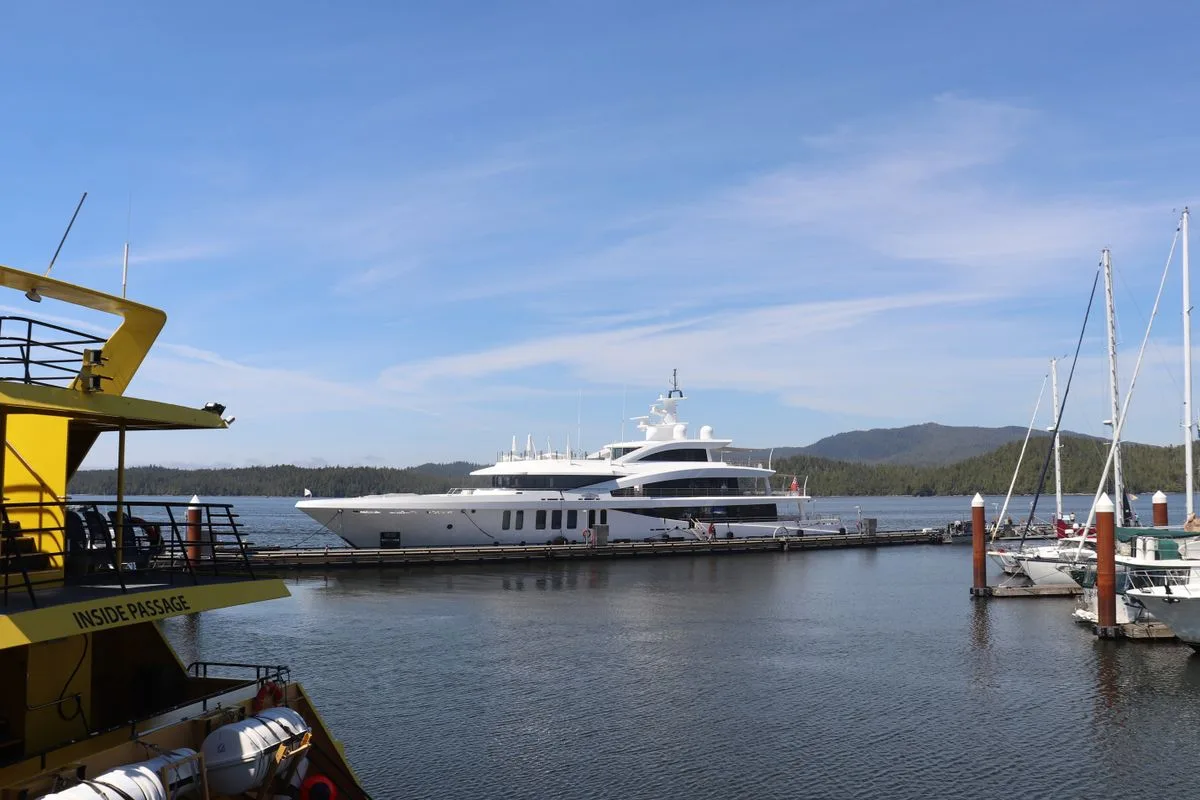
On the dock at a small Alaskan harbor, the first thing a visiting crew notices is the silence between boats. No lines of charter fleets, no marina music. Just the sound of water against a hull, and somewhere across the channel, a humpback exhaling. The Inside Passage rewards that kind of attention — but it asks for preparation that warm-water cruising never demands.
The sailing Inside Passage Alaska route runs through sheltered coastal channels from the south-east panhandle north toward Glacier Bay country, threading between forested islands and the mainland. It suits experienced cold-water crews who want remoteness, wildlife and dramatic scenery more than they want services. The catch is simple: the water is cold year-round, the season is short, and the support network is thin. This is a route where self-reliance, not amenities, is the draw.
It is worth being clear about what kind of sailing this is. As Wikipedia notes in its overview of the subject, cruising spans everything from extended offshore passages to coastal sailing within sight of land — and the Inside Passage sits firmly in the second category for most of its length. Land is rarely far away. That shelter is the route's great gift, and it is why the passage has carried boats — first under sail, then under steam, which progressively displaced sail from commercial work in the 19th century — for well over a century of trade and travel along the coast.
What does the route actually look like?
Think of the Inside Passage as a chain of protected waterways rather than a single channel. Islands stand between the boat and the open Pacific for most of the way, so the sea state is usually moderate even when the weather is working. The waterway logic runs south to north: crews typically enter from the south-east and work their way up the panhandle, hopping between sheltered channels, bays and small communities, with the ordering principle being one protected leg at a time.
Because the route is sheltered, the challenge is not open-ocean weather. It is the details: currents that run hard through narrow passages, fog that arrives without much warning, debris in the water, and the sheer cold of the sea itself. A prudent crew plans each day around the current, not against it, and treats the tide tables as the most important document aboard.
When can you sail it, and how long does it take?
The cruising season is short by Mediterranean standards. The warm months — roughly summer — are the practical window, when daylight runs long and the weather is most settled. Outside that window, cold, dark and storm systems make the route a different proposition entirely, one that belongs to working vessels and properly equipped expeditions rather than visiting cruisers.
As for duration, the honest answer is that the passage expands to fit the time you have. A crew with a couple of weeks samples a section of the route and turns around. A crew making the full run end to end should think in terms of a season's project, not a holiday week. Anyone used to compressing a coast into seven days — the kind of circuit described in our guide to the British Virgin Islands in seven days — should recalibrate completely. Distances that look short on the chart take longer here, because every leg is planned around tide and weather windows rather than around a marina booking. This connects to our earlier piece, The British Virgin Islands in seven days: a circuit that still works.
Where do you stop, and what is there?
The passage is dotted with small ports and anchorages rather than resort marinas. Expect working harbors, floatplanes, fishing fleets and modest shoreside services. Some communities welcome visiting yachts warmly; others are primarily industrial stops. The rhythm of a day is different from most cruising grounds: you might anchor in a forested cove with no services at all, then tie up the next night at a small town dock where the harbormaster keeps informal hours.
Wildlife is the reason most crews come. Whales feed in the channels, seals and sea lions haul out on the rocks, bears work the shorelines, and eagles are so common they stop being an event by the third day. The etiquette matters: give feeding whales a wide berth, keep speeds down near haulouts, and remember that in many of these waters the wildlife is protected by rules that visiting crews are expected to know. Check the current regulations before you go, because distances and approach rules are set by the authorities, not by tradition.
What does it take to do it safely?
This is the section to read twice. Cold water changes every calculation. A person in the water here has minutes, not hours, so lifejackets, harnesses and a disciplined cockpit routine are not optional extras. Dressing in layers is the standard advice for any sailing — the water is always cooler than the shore, as beginner guidance from wikiHow among others emphasizes — but in Alaska the layering is about survival as much as comfort, with serious foul-weather gear and warm underlayers as the baseline.
Beyond clothing, the practical checklist looks like this:
- Heating. A reliable cabin heater is not a luxury. Mornings and evenings are cold even in summer.
- Charts and pilotage. Detailed charts, a good cruising guide and current tide tables for every narrow passage on your route.
- Communication. Weather information and a way to call for help. Cell coverage is patchy to nonexistent along much of the route.
- Fender and anchor discipline. Tides here are large, and anchoring in steep coves with big tidal range demands more scope and more attention than most crews are used to.
- A float plan. Tell someone where you are going and when you will be back, every single leg. It is basic advice anywhere; here it is essential.
Crews coming from Europe's fjord country will recognize some of this. The pacing of a Norwegian fjord — slow, weather-watched, anchored in silence — described in our piece on the Hardangerfjord is a closer mental model for Alaska than any warm-water destination. The difference is scale: the Inside Passage is longer, more remote and colder.
Is it worth it for a visiting crew?
Our analysis is straightforward. For crews who want marinas, restaurants and a social scene, the Inside Passage will feel empty in the wrong way. For crews who have already handled tidal water, cold-weather gear and self-sufficient anchoring, it offers something almost nowhere else does: a thousand miles of sheltered, wild coastline where the day's plan is set by the tide and the whales set the pace. It belongs on the short list of genuinely demanding, genuinely rewarding cruising grounds — a very different entry from the gentle, family-friendly flat water of the Ionian, and all the better for it. For related coverage, see The Ionian in a week: flat-water Greece for cautious crews.
What the evidence supports is the shape of the trip: sheltered channels, a short summer season, thin services, cold water and rich wildlife. What no general guide can supply is your crew's readiness, and that — not the itinerary — is what decides whether the passage becomes a highlight or an ordeal. If the readiness is there, the route itself rarely disappoints.