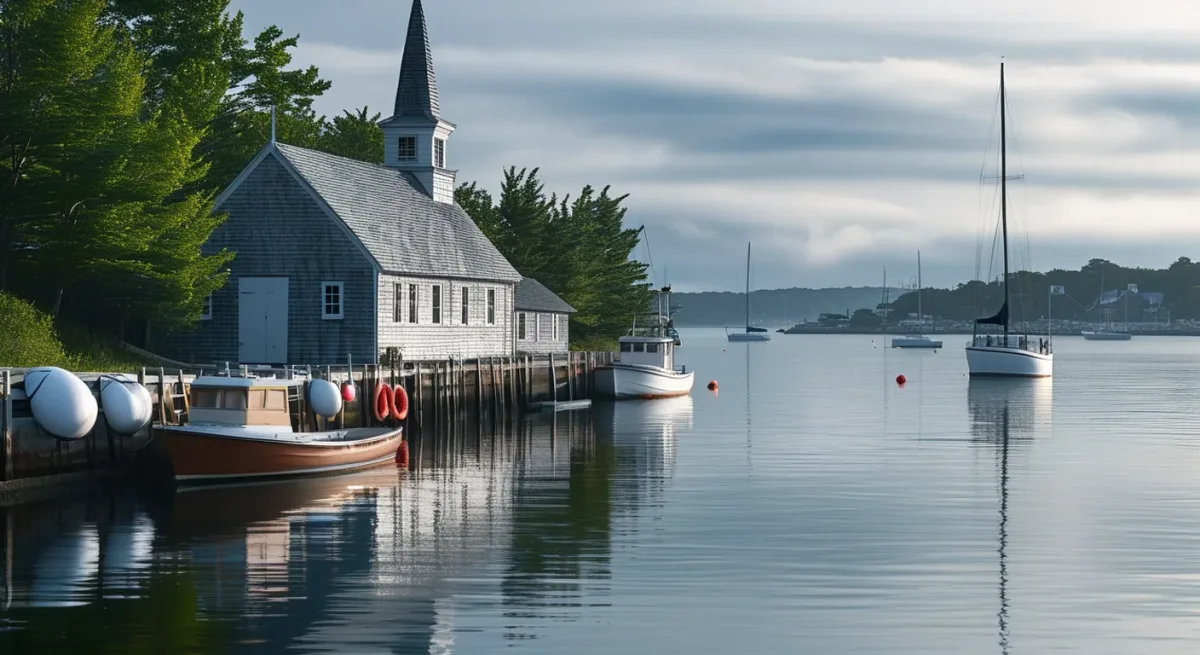
New England is the East Coast's yachting homeland and the week out of Newport is its classic run: Rhode Island's sailing capital, then Block Island's pond, Martha's Vineyard's harbours, and Nantucket fourteen miles further out to sea, with the whole trip strung on short hops across water that is colder, greener and moodier than the Mediterranean's — and all the better for it. The American summer is short and sincere here: July and August, with June and September as the connoisseurs' margins, and a weather personality built from sea breezes, sudden fog and the occasional nor'easter leftover that makes the forecast part of the fun.
This is a planning guide from published pilot information; US waters use the National Weather Service's marine forecasts as the baseline, and mooring reservations — the region's currency — open months ahead.
Newport: the natural start
The town that America's Cup built still runs on the water: a harbour of moorings rather than marina walls — the mooring fields are the institution, with launch services running like bus routes — and a waterfront of gilded-age stone, regatta clubs and serious chandleries. Newport rewards a full day ashore: the cliff walk past the mansions, the tennis hall of fame's absurd charm, and dinner somewhere that has been serving sailors since the defence of the cup was a local matter.
Block Island: the first hop
Three hours south, Great Salt Pond's protected bowl fills each summer afternoon with the weekend fleet — moorings and anchorage, a launch to the town's one layered street, bluffs and beaches by bicycle or golf cart. Block is the week's decompression chamber: after it, the schedule stops pretending.
The Vineyard and the sandbank at the end
Martha's Vineyard offers two harbours and two temperaments: Edgartown, all white pickets and serious boutiques, and Menemsha's working fishing harbour at the island's west, where the sunset crowds the jetty with people and the chowder outranks the view. Then Nantucket: the crossing from the Vineyard is short but genuine open water, and the reward is a town of grey shingles and cobblestones at the top of a sandbank, bicycles on the ferry-free streets, beaches with serious surf on the south side, and a light that has been persuading people to stay since the whaling era. Give it two nights; it is the week's finish for a reason.
The American mechanics
The mooring system is the difference from Mediterranean habits: reserve ahead — the popular harbours' fields sell out for July and August by spring — or arrive early and take your chances with the harbourmasters' VHF etiquette, which is the region's own polite sport. Fuel, water and pump-outs are organised around the mooring fields; the launch service is the taxi; and the shore's currencies are reservations made weeks out in season. Add the weather's honesty — fog burns by noon, sea breezes fill the afternoons — and the week runs on a rhythm the Mediterranean forgot: mornings moving, afternoons anchored, evenings ashore among people who have been summering on the same mooring for forty years.
Who should skip it
Warm-water swimmers: the Atlantic here is bracing even in August, and the beaches are for the committed. But for crews who want towns with history, sailing with weather in it, and a week that runs on reservation discipline and lobster money — there is no better American water.