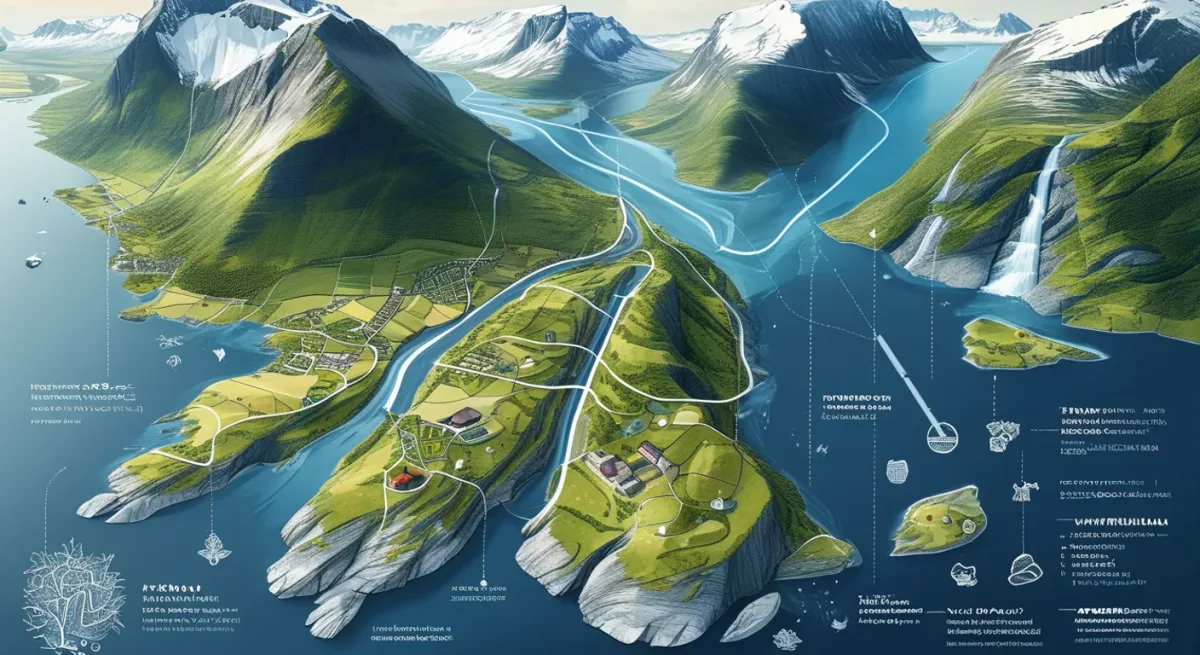
The Hardangerfjord is Norway's second act — close to two hundred kilometres of glacial valley drowned by the sea, south of and quieter than the Geiranger tourist machine, with fruit orchards on its lower slopes where the Gulf Stream's last warmth lands. The product is a week that inverts every Mediterranean habit: distances are long and slow, the water is deep and cold, the light lasts past eleven in midsummer, and the itinerary is a sequence of natural theatre — a waterfall, a glacier arm, a village of forty houses and one very good bakery — rather than a circuit of bays. Guests who adjust the tempo call it the best water they've done; guests who don't call it cold. Both are right.
This is a planning guide from published pilot information; Norwegian waters have their own formalities and the weather is a genuine participant — confirm current guidance with your agent or the ship's navigator.
The mechanics of fjord navigation
The central fact is depth: the fjord's main basin runs to hundreds of metres, so anchoring happens in the side bays' shallow shelves and pocket coves — the pilot books' marked anchorages, often with a dramatic echo-profile — and marinas or guest quays at the villages pace the week. Distances look short on the chart and are not: sixty miles of fjord at fjord-pace, with something to look at the entire way, is a proper day. The weather's contribution is variability — calms, squalls off the cliffs, and the mountain wind's local names — and the light's contribution is the schedule: June's endless evenings let dinner happen at ten and the photograph at eleven, while September shortens the day into golden rationing.
The week's set-pieces
From the seaward end: the outer fjord's narrow drama, then the orchard country around the village of Herand and the shores that make Norway an apple-cider nation; the Steinsdalsfossen — the waterfall with the path behind it, sixty kilometres of valley inland from the mouth, children's favourite and photographer's education; Sorfonn's glacier country and the arm of ice that hangs over the valley at the branch fjords' heads; Rosendal's barony — a genuine stately home with gardens under the mountains, reachable by water in a landscape that has no business supporting either; and Eidfjord at the inner end, the gateway village under some of the tallest cliffs in the system, where the cruise ships call and the small boat goes quiet up the last arms. Somewhere in the middle: a salmon farm's shop, a mountain hut's sourdough, and the world's best excuse for the boat's heating.
How to run it
Base out of Bergen or the outer coast's marinas and commit to one fjord rather than a grand tour — the Hardanger alone overflows a week's honest pace. Mix marina nights at the villages with one or two anchor evenings in the side arms, where the silence at midnight is the loudest thing you've heard all year. Pack for four seasons regardless of the month, budget for Norway honestly, and let the boat's interior — the saloon, the stove, the good coffee — be part of the plan rather than the fallback. The Mediterranean trains you to live outside; the fjords teach you to live slow, inside the scenery, with the engine turning half speed and the chart keeping score.
Who should skip it
Swimmers (bracing is a compliment), warm-water romantics, and anyone whose holiday needs a beach club's certainty. For everyone else — and especially for crews who have done the Med and want water that still feels like an expedition — the Hardanger is the northern answer to the question the blue cruise answers in the south.