How are superyachts built? In stages, over years, by a yard that wins a signed contract only after a design has been fixed and a price agreed. The broad sequence is the same for every large custom build: concept and naval architecture, contract signing, hull construction, systems installation, interior outfitting, then trials and delivery. The catch for any owner is that each stage can stretch, and the last one is the one most often underestimated.
This explainer walks the timeline in order, from the first conversation with a designer to the day the yard hands over the keys. It is a sourced roundup of standard industry practice, written for readers who follow the yachting news cycle and want to understand what a launch or a delivery actually represents. No specific yard, project or price is named, because the purpose here is the mechanism, not the gossip.
Stage one: concept, design and the naval architect
Every build starts with a brief, not a drawing. The owner, or the owner's representative, states what the yacht must do: how many guests, which cruising grounds, how far between fuel stops, whether it carries a helicopter or a tender fleet. A naval architect then turns that brief into a hull form, and a designer shapes what the exterior and interior look like.
Two documents matter most at this stage. The first is the general arrangement, the floor plan of the whole vessel. The second is the technical specification, which lists everything from the class of steel or aluminium in the hull to the brand of galley equipment. The specification becomes the yard's job description. Anything not written into it is a future argument, which is why experienced owners' representatives read it the way a lawyer reads a contract.
Naval architecture is not styling; it is physics with consequences. Hull length, displacement and beam determine how the yacht moves in a sea and how much fuel it burns. Owners increasingly weigh efficiency against speed, a tension covered in our piece on green yachting technology, where the industry's real position on emissions is less settled than the marketing suggests. This connects to our earlier piece, Green yachting technology: where the industry actually stands on emissions.
Stage two: the contract and the build slot
Once the design is fixed, the owner signs a build contract with a yard. The contract sets the price, the delivery date, the payment schedule and the specification. Payment typically runs in instalments tied to milestones: contract signing, steel or aluminium cutting, hull turning or launching, and delivery. The exact schedule varies by yard and jurisdiction, so no single percentage applies across the industry.
Yards do not build on demand. Build slots are booked years ahead at the leading yards, and the slot date shapes everything downstream. An owner who wants a delivery before a particular charter season has to work backwards from the yard's capacity, not forwards from their own calendar. This is also where the owner decides on classification: the vessel must be built to the rules of a classification society and flagged in a registry, and those choices affect both construction standards and how the yacht may later be chartered.
Stage three: hull construction, the part you can photograph
Construction begins with cutting the hull material. Large custom yachts are usually built in steel or aluminium; many smaller superyachts and most production-style vessels use composite materials such as fibreglass or carbon fibre. Steel is favoured for large displacement hulls because it is durable and forgiving; aluminium saves weight; composites save more weight but demand different skills and quality control.
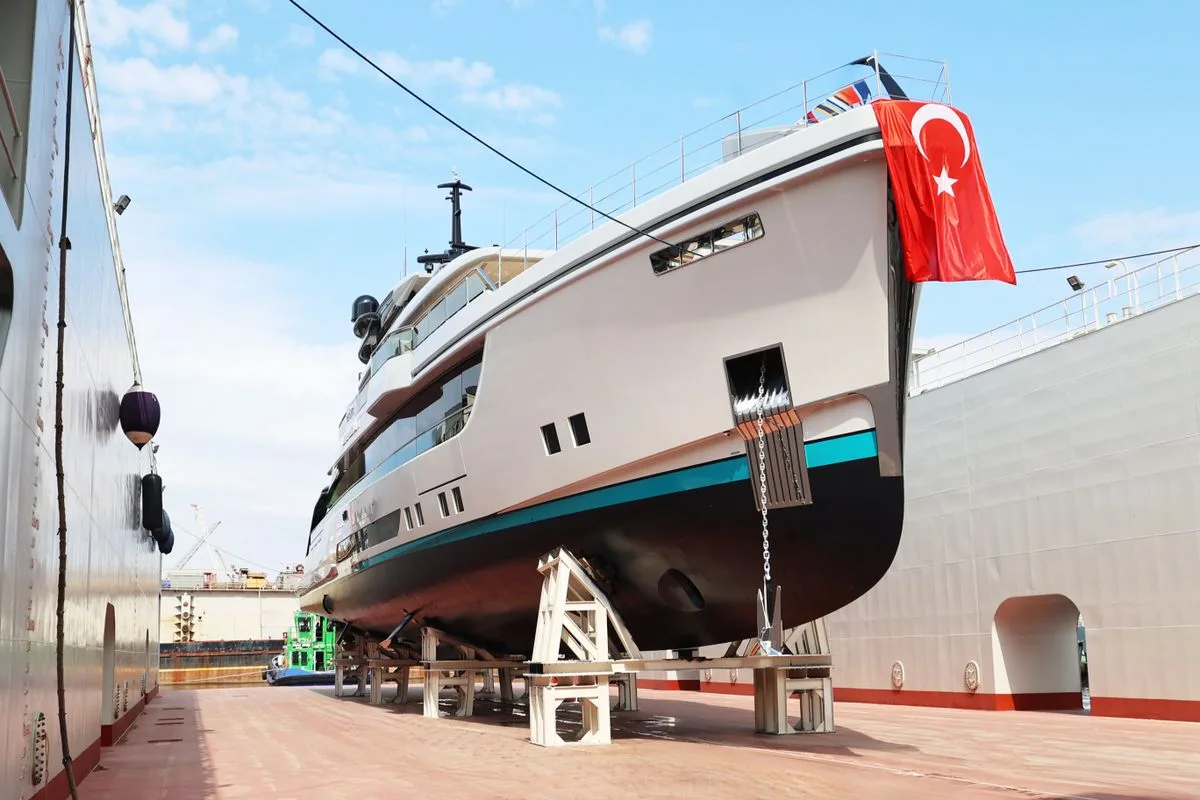
The hull is assembled in sections in the shed, then joined. At some point the yard holds a keel-laying or first-cut ceremony, and the project acquires a hull number that will follow it through its life. Later comes the launch, when the hull enters the water for the first time, usually still unfinished. A launch is a milestone, not a completion. The interior, in particular, is often fitted out after the yacht is afloat, which is why a launched hull at a quay can look deceptively close to done when it is not.
Stage four: systems and outfitting, where the money goes
What makes a superyacht a superyacht is largely invisible. Electrical systems, plumbing, HVAC, watermakers, stabilisers, navigation electronics, fire safety and wastewater treatment all go in during this phase, alongside the engine room installation. Stabilisers, which reduce roll at anchor and underway, are among the most requested systems on any modern build.
The interior outfitting is the longest single phase on most custom projects. Cabinetry, stone, fabrics and joinery are built to an interior designer's drawings, often in workshops far from the yard, then installed piece by piece. Weight matters here too: every tonne of marble is a tonne the naval architect has already budgeted for, and late additions to the interior can affect the yacht's stability and performance. Owners who change their minds at this stage pay in both money and months.
Our analysis of build timelines is simple: hulls are predictable, interiors are not. The yard can forecast steel progress with reasonable confidence. It cannot forecast how quickly hundreds of interior decisions get approved, which is why the owner's representative, who coordinates decisions and polices the specification, earns their fee most visibly in this phase.
Stage five: sea trials and delivery
Before handover, the yacht goes to sea trials. These are test runs that check speed, fuel consumption, manoeuvring, noise and vibration levels, stabiliser performance and every major system, against the contractual specification. The classification society surveys the vessel throughout construction and issues the certificates needed to operate legally. Crew join, provisions load, and the owner's team inspect the work in a process the trade calls the delivery survey. For related coverage, see The Giraglia fleet is at sea: the offshore race runs to Genoa.
Snag lists are normal. A first round of trials usually produces a list of defects and adjustments, and the yard corrects them before final acceptance. Delivery happens when the contract's conditions are met: the yacht performs as specified, the certificates are in place, and the final instalment is paid. From there the yacht enters service, and the owner's real education begins, because operating a large vessel is a separate discipline from building one. Readers curious about that side of the ledger will find the practicals in our life aboard section.
What this means for anyone following the market
Understanding the build sequence changes how you read the industry's announcements. A contract signing means years of patience ahead. A technical launch means the hard part is still inside the shed. A delivery means the specification was met, not that the yacht is perfect. And a delay, the industry's most common headline, usually traces to one of three places: late interior decisions, systems integration problems, or a yard's slot running long because the previous project did the same.
For the reader planning a charter rather than a build, the sequence still matters. New deliveries each season shape the charter fleet, and a yacht's first charter season often follows its sea trials closely. The evidence for any specific project, its yard, its dates and its price, comes from the yard's own announcements and the show reports we cover; the mechanism described here is the frame those facts sit in. What remains unknown in any build, until delivery, is whether the specification survived contact with reality. That is the question every launch photograph declines to answer.
Sources: espn.com · cbssports.com · nbcsports.com · sports.yahoo.com