Green yachting technology is no longer a concept piece at boat shows. Hybrid propulsion is on the water, shore power is being fitted to marinas one berth at a time, and yards are running serious test programmes on methanol, hydrogen and fuel cells. The honest summary: the hardware is arriving, the fuels are not decided, and the emissions case is being made quietly, one system at a time.
The catch is that the industry's claims run ahead of its infrastructure. A yacht can carry a battery bank, but if the marina cannot supply clean electricity ashore, the emissions simply move up the cable to the power plant. This piece looks at the three levers that matter — how yachts are propelled, how they draw power at the dock, and what fuels the yards are actually testing — and at who pays for each.
Why propulsion is the first thing to change
Most of a motor yacht's fuel is burned underway, so propulsion is where any emissions programme starts. The traditional answer, a diesel engine geared to a propeller, is efficient at cruising speed and wasteful everywhere else. At anchor, the engines idle to run generators; on a slow approach to harbour, they loaf far below their best operating point.
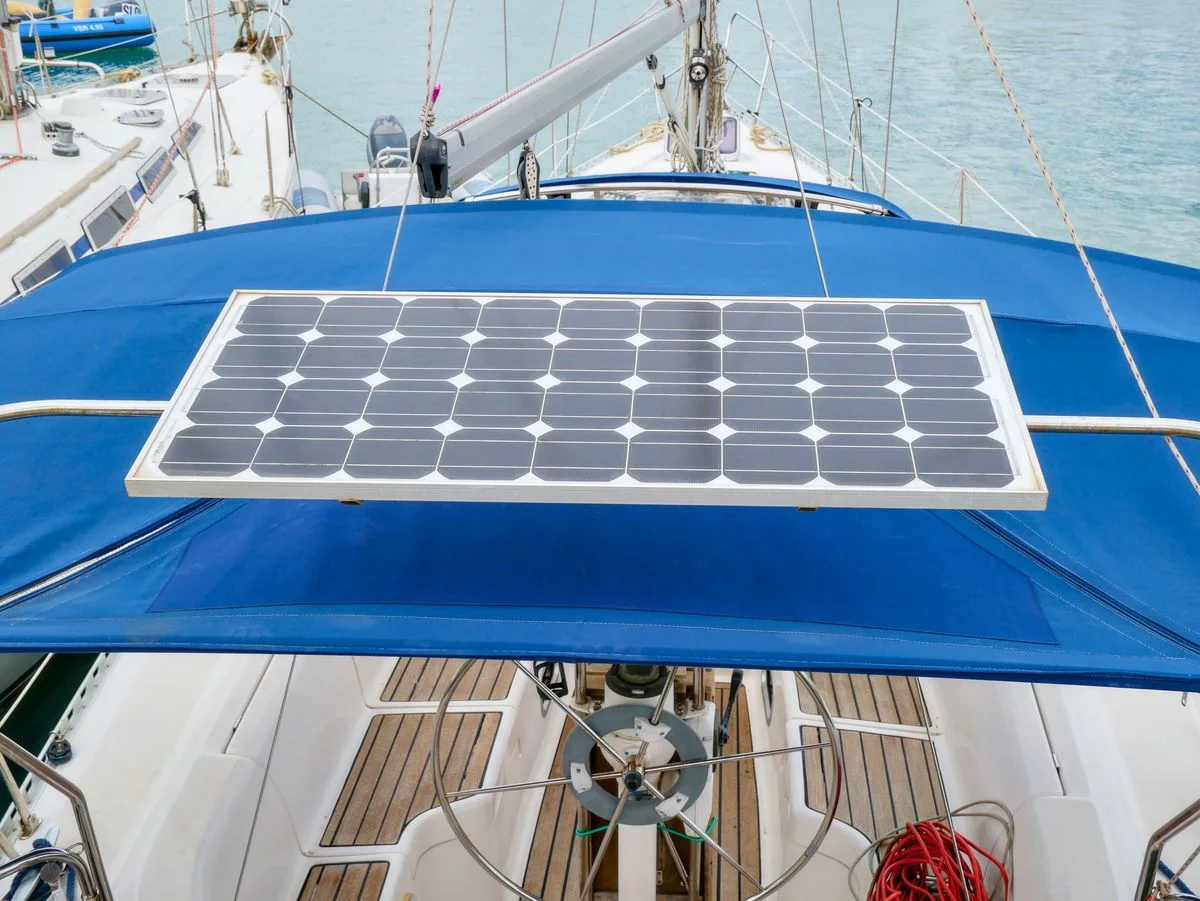
Hybrid arrangements attack that mismatch. In a diesel-electric setup, generators produce electricity and electric motors turn the propellers, so each generator can run near its sweet spot or shut off entirely. In a parallel hybrid, a conventional drivetrain is paired with an electric motor and a battery bank, letting the yacht creep in and out of harbour on batteries alone and run hotel loads — air conditioning, galley, lighting — without starting a main engine. Sailing yachts have their own version: hydrogeneration, where a freewheeling propeller under sail doubles as a turbine and recharges the batteries.
None of this is new engineering in the abstract; large ships have run diesel-electric for decades. What is new in yachting is the packaging — batteries compact enough, and owners willing to pay for the extra weight, complexity and cost. The trade-off is real: a hybrid yacht carries more equipment, and that equipment needs space, cooling and crew training. The numbers for any given build decide the case, not the brochure.
Shore power: the least glamorous lever, and the most effective
Shore power is simple. Instead of running generators at the dock, the yacht plugs into the marina's electrical grid and switches its generators off. The gain is immediate: no fuel burned, no exhaust on the quay, no generator hours logged. Anyone who has slept aboard next to a running genset understands the appeal without a single emissions figure.
The mechanism matters for who wins and who loses. The yacht's owner saves generator wear and fuel. The marina must invest in higher-capacity electrical infrastructure, and in many harbours that means upgrading transformers, cabling and berth connections — a capital cost that surfaces in berth fees. And the environmental gain depends entirely on what generates the grid electricity. Plugging into a coal-heavy grid shifts the emissions ashore rather than removing them; plugging into a hydro- or solar-backed grid comes close to eliminating them at the berth.
What this means for a cruising plan is practical, not ideological. Before signing a berth contract for a season, ask whether the berth supplies high-capacity power and at what tariff. In marinas that have installed it, shore power is becoming a booking criterion in its own right — the way depth at the berth and Wi-Fi already are.
The fuels yards are testing
Batteries solve the harbour and the anchor watch. They do not yet solve a 400-nautical-mile passage, which is why the yards are testing fuels. Three threads stand out in the industry's work, each at a different stage.
- Methanol is the nearest-term candidate. It is liquid, so it fits existing tanks and handling routines reasonably well, and several engine makers have developed conversion kits and dedicated engines for it. Its emissions case depends on how the methanol is produced — the fossil-derived version cuts some pollutants but not carbon in full, while renewable methanol made from captured carbon or biomass is the version the industry ultimately wants.
- Hydrogen and fuel cells promise zero emissions at the point of use, with water as the exhaust. The obstacles are physical: hydrogen takes up far more volume than diesel for the same energy, whether stored as a compressed gas or a cryogenic liquid, and bunkering infrastructure barely exists outside a handful of ports. Fuel cells are best understood today as a clean way to run hotel loads and short hops, not as a replacement for crossing oceans.
- Sustainable drop-in fuels — biodiesel and synthetic diesel made from waste or captured carbon — are the least disruptive path, because they ask nothing new of the engine. Their constraint is supply and price, not technology.
Our analysis of the three threads: the industry is hedging, correctly. No yard can commit its customers to a single fuel before the bunkering network exists, so most serious programmes keep engines fuel-flexible and electrify what can be electrified. That is not indecision; it is a chartering desk's instinct — keep your options open until the market tells you which way the freight is flowing.
Who pays, and what it changes for the reader
Every one of these systems lands on a price. A hybrid drivetrain adds capital cost at the build or refit stage. Shore power adds cost at the marina, recovered through tariffs. Alternative fuels, when they arrive at scale, will cost more per unit of energy than fossil diesel for some years. The strongest counter-argument to the whole programme is that the paying customer — the charter guest or owner — may not value any of it enough to fund it.
The industry's answer, so far, is regulation plus reputation. Emissions rules in some cruising grounds are tightening, and marinas with shore power increasingly market themselves on it. For the reader planning time on the water, the practical steps are modest: favour marinas with shore power where the itinerary allows, ask a charter broker which crewed yachts run quiet at anchor, and treat any yard's green claim as a claim — ask for the mechanism, not the adjective. For a sense of how the wider season shapes these choices, the Boot Düsseldorf opens its 2026 halls: nine days, one indoor fleet show coverage is a reasonable place to watch which systems the builders actually display, and our yachting-news section tracks the launches and marina developments as they land. We covered a connected angle in Boot Düsseldorf opens its 2026 halls: nine days, one indoor fleet.
Where this leaves the industry
The evidence supports a modest verdict. Hybrid propulsion and shore power are working technology, spreading now, and they cut emissions and noise at the berth and at anchor in ways a buyer can verify. The deep-decarbonisation question — what fuel burns on passage — remains open, with methanol nearest, hydrogen furthest and drop-in fuels in between. What remains unknown is the pace of the fuel infrastructure and who bears the cost premium. The numbers, when they arrive, will settle it. Until then, the sensible position is the one this publication takes toward every yard announcement: check the mechanism, date the claim, and watch the berth fees. Readers following this should also see Miami's boat show closes its five days: the February verdict.
Sources: figma.com · greenmill.com · creativebooster.net · thecoloratlas.org