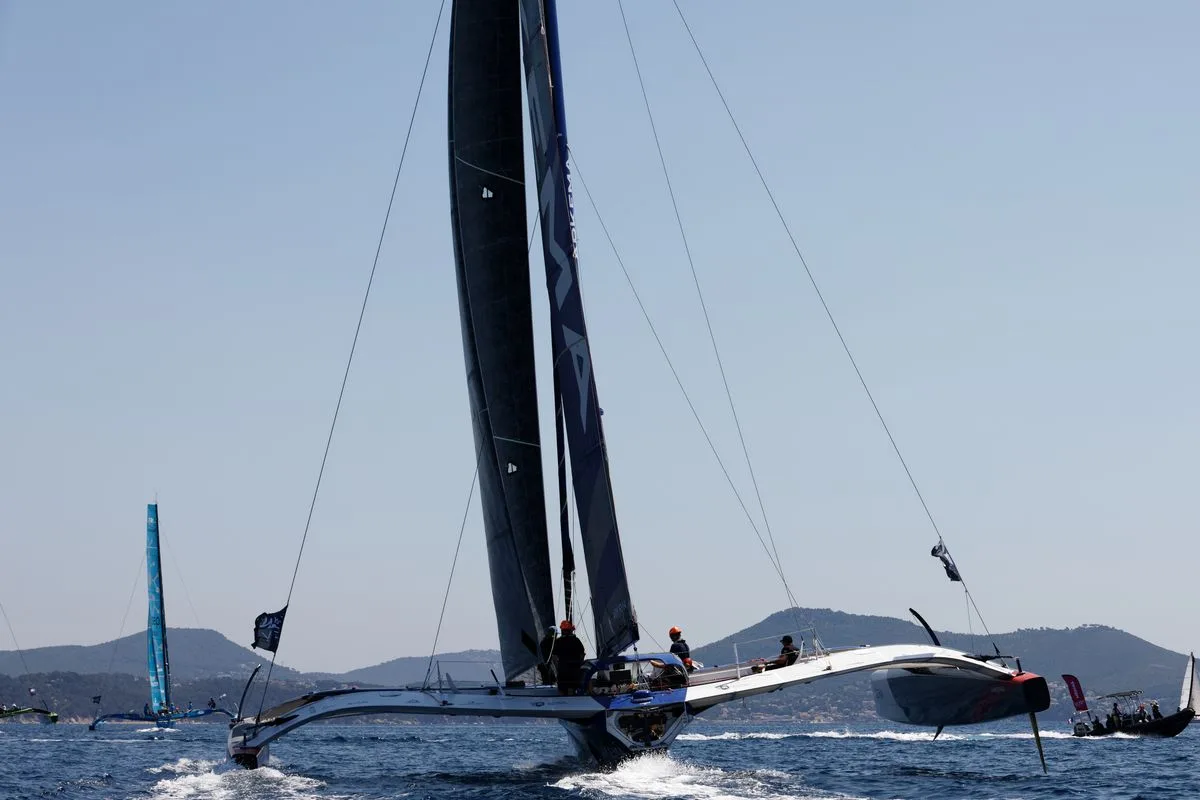
From the deck of a charter yacht, a regatta start can look like organized chaos. Flags go up, horns sound, boats circle, and then everyone accelerates toward the same line at the same second. There is a system underneath it all. Once you can read it, the minutes before the gun become the best theatre of the day.
This guide explains the signals, the sequence and the rules that shape a start. Whether you watch from the water or from a clubhouse balcony, you will be able to follow the action instead of guessing.
The Rules Behind the Show
Racing is governed by the Racing Rules of Sailing, published every four years after the Olympic Games by World Sailing, the sport's world governing body. The rules are lean. Since a major simplification in the late nineties, only fifteen of the ninety-one rules govern what boats do when they meet on the water. A newcomer does not need all of them to follow a race.
Sailing is also a self-regulated sport. Competitors are expected to enforce the rules themselves. A fundamental principle holds that a sailor who breaks a rule will promptly take a penalty. That penalty may mean sailing a full circle and rejoining the race.
Flags First, Sounds Second
Every race signal is visual, and sound exists to make you look. Races are governed with flags and sound signals, and the flags come from the international maritime signal flag set. Each time a signal flag is raised or lowered, a sound signal draws attention to it. The pattern of sounds, whether one short blast or one long one, is set by the rules for each type of signal.
The race committee can adjust these signals through a document called the Sailing Instructions. That is why two regattas can run their starts a little differently. Serious spectators read those instructions before the first warning signal. For related coverage, see The Monaco Yacht Show: a first-timer's plan.
Reading the Start Sequence
The sequence before a start is built from a small set of flags. A class flag tells one group of boats that their sequence has begun. The preparatory signal follows, and these flags are used before a race start as part of the start sequence. When the class flag finally comes down, the start is on, and the fleet is free to cross the line.
Timings between signals are fixed by the rules and the Sailing Instructions, so the rhythm is steady and learnable. Watch one class through a full sequence. You will soon be able to call the next start yourself.
Postponements, Recalls and Do-Overs
Not every start goes to plan. The Answering Pennant, flown with or without a numeral pennant, tells the fleet that a race is postponed. A numeral below it shows the delay in hours. If boats cross the line too early, recall signals bring them back for another try. Weather can stretch a schedule, and a patient committee is a normal part of the sport.
The First Minutes After the Gun
Once the fleet is racing, the meeting rules take over. Boats on a port tack keep clear of boats on starboard. When boats are overlapped on the same tack, the windward boat keeps clear of the leeward boat. A boat that is astern keeps clear of one ahead. A tacking boat must stay clear of boats that are not tacking. Even a right-of-way boat must avoid a collision once it becomes clear the other boat is not keeping clear.
Conclusion: Learn the Flags, Enjoy the Show
A regatta start rewards a little homework. Learn the class flag. Listen for the sounds. Count the rhythm between the signals. Within one sequence you will know when the fleet is live, when a start is postponed, and who has the right of way at the line. From then on, the pre-start carousel is not chaos at all. It is a clockwork show, run in flags and horns, five minutes at a time. We covered a connected angle in The RORC Caribbean 600, for people who like their sleep in one lump.