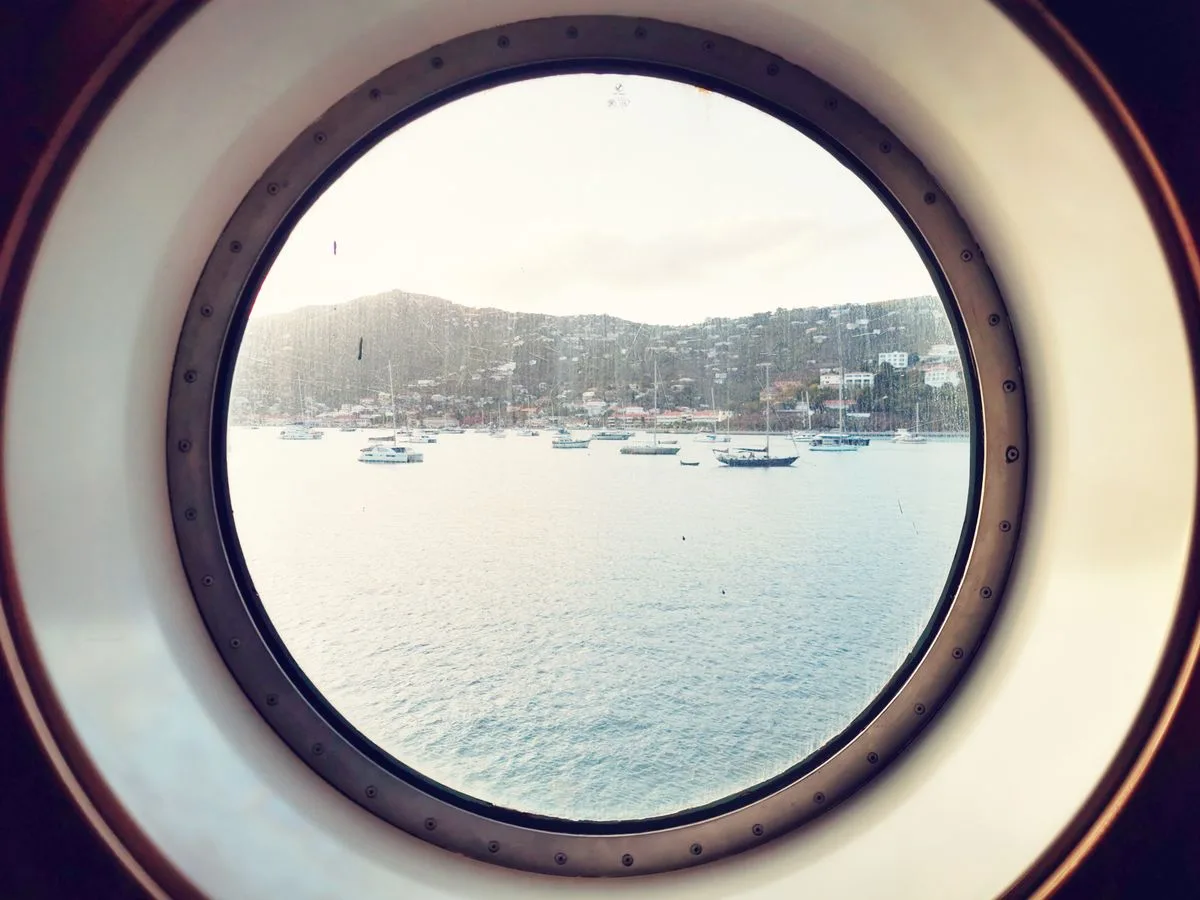
A winter berth in a northern marina and a summer one in the tropics ask the same question: can this hull keep a person comfortable when the weather turns against it? The liveaboards who stay aboard all twelve months say yes, but only with preparation. Living aboard year round is less about endurance than about routine — airflow in summer, dryness in winter, and vigilance at the change of seasons.
The catch is that the boat never rests. A house sits still while the seasons pass over it. A boat floats in water that is often warmer or colder than the air, and that temperature difference is what produces the liveaboard's oldest enemy: condensation. Everything that follows is about managing it, in heat as much as in cold. Readers following this should also see How much does it cost to live on a boat? The honest line items.
Why condensation is the year-round problem
Warm, moist air meets a cold surface and turns to water. On a boat, those cold surfaces are everywhere a hull touches the sea: the inside of the hull itself, lockers that back onto it, the metal of portlights on a cold night. Every breath, every pot of pasta water, every wet towel adds moisture to a small interior volume. Left alone, it becomes mildew in the lockers and rust on the fittings.
The fix costs nothing and is the first thing seasoned liveaboards recommend: move air. A boat closed up tight will sweat; a boat with a through-flow of air will dry. That means open vents forward and aft so air travels, not just one hatch. It means leaving locker doors cracked so the backs of cupboards breathe. It means running a small fan on a low setting all night in cold weather, pointed along the hull rather than at a face.
Handling the heat
In hot climates the enemy is solar gain, the way a boat's deck and cabin top absorb the sun all day and radiate it into the cabin all night. Liveaboards in warm latitudes treat shade as equipment. Awnings, biminis and simple shade cloth over the deck keep the sun off the cabin top before it heats. A dark deck in full sun turns a cabin into an oven; the same deck shaded stays workable. This connects to our earlier piece, Tampa Bay during the World Series: how to plan a trip while the hotels are full.
Airflow matters more than refrigeration. Hatches open on the windward side low and on the leeward side high lets warm air rise and pull cooler air through. Many long-term liveaboards say the best money they spent on comfort was not air conditioning but a proper shade rig and good hatch screens. Where air conditioning is used — and in some marinas it is the only way to sleep in August — it works best with the boat closed and the unit sized to the space, running steadily rather than in bursts.
The sea itself helps. A boat on a mooring or at anchor gets a breeze a marina berth may lack, and many liveaboards plan their hot-season location around that: a windy anchorage over a convenient dock. Water also carries heat away from the hull, which is why a boat at anchor often feels cooler than a boat on the hard or in a shallow, still marina basin.
Handling the cold
Cold-weather liveaboards — and there are more of them than the charter season suggests, in northern marinas where boats stay in the water under the frost — organize around three things: heat, insulation and moisture.
Heat sources vary. Diesel-fired heaters that duct warm air through the boat are common because diesel is already aboard. Electric space heaters work in marinas with reliable shore power, but they draw heavily and a marina's power pedestal may limit what a boat can pull. The practical approach most cold-climate liveaboards describe is layered: a main heater for the coldest hours, a small backup in case the first fails, and never a single point of failure in the middle of a freeze.
Insulation on production boats is modest, so the work is targeted. Foam boards or reflective panels in hatches and portlights overnight. Curtains or blinds to cut the radiating glass area. Drafts checked at hatches, doors and the cable entry where shore power comes aboard. None of it is glamorous; all of it is the difference between a cabin that holds heat and one that heats the outside world.
Moisture is the cold-weather tax. Every degree of heat inside makes the air hold more water, and every cold hull surface wrings it back out. Cold-climate liveaboards run dehumidifiers where shore power allows, wipe down portlights each morning, and keep a close eye on the spaces nobody opens — under berths, behind the water tank, the backs of hanging lockers.
What this means: the seasonal checklist
The liveaboards who make this work treat the change of seasons as a scheduled job, not a reaction. The pattern is consistent across climates:
- Before summer: shade rig inspected, hatch screens fitted, fans serviced, refrigeration checked, any through-hull or cooling work done while the water is still comfortable to work in.
- Before winter: heating system serviced with a backup plan, shore-power connections and cords inspected, dehumidifier positioned, hatches and portlight seals checked, any known draft hunted down.
- At every change: a full mildew pass through lockers and bilges, because a problem caught early is a wipe-down and one caught late is a refit.
Water systems deserve their own line on that checklist. In hot weather, tanks heat and encourage growth, so they get treated and flushed more often. In cold weather, the risk is freezing — hoses and any exposed plumbing are the first things to fail, and liveaboards in freezing climates either heat the spaces those lines run through or drain them. Our analysis of the routines experienced liveaboards describe comes down to this: the boat punishes neglect slowly, then suddenly, and the season change is when it happens.
The honest trade-offs
None of this makes a boat feel like a house. A cold snap means wearing layers below and warming the cabin in shifts. A heat wave means planning the day around the cool hours, the way the galley already does. What the routine buys is a boat that stays healthy and a liveaboard who is comfortable enough to keep choosing this life — which is, in the end, the point.
It is also worth being clear about cost. Heating and cooling both show up on the electric bill or the fuel ledger, and a marina that charges for power by consumption will make an inefficient set-up expensive fast. The broader money picture of this life — moorage, insurance, maintenance — is covered separately in our guide to what living on a boat actually costs; the seasonal work above is the part of that budget a newcomer most often underestimates.
What remains unknown, for anyone considering the move, is personal: how much cold or heat you will actually tolerate, and how disciplined you will be about the routine. The liveaboards who last are not the ones with the best equipment. They are the ones who open the vents, wipe the portlights and check the lockers — every season, without fail.