A crewed yacht is close to the ideal family holiday machine: the water is the entertainment, the crew are extra adults who are professionally likeable, the bed never changes while the view does, and nobody drives anywhere. The difference between the version that works and the version that ends in tears is decided before boarding — on the boat, the route and a handful of rules — because children take to boats completely, and what they take to them with is structure.
This is planning guidance from standard crewed-charter practice; every crew runs its own safety protocols, which govern aboard.
Choosing the boat for children
Cabin layout first: twins or bunks beat doubles, and a layout that puts children's cabins near the parents' beats one that doesn't. Ask the broker for the yacht's child equipment in writing — lifejackets in sizes, netting on rails where fitted, bath arrangements, high chairs for the small — and the crew's family experience specifically, which is a question good crews answer gladly. Water access decides the daily mood: a swim platform with steps beats a ladder, a shaded deck area is worth a cabin, and the toys inventory should be confirmed rather than assumed — the kayak and the paddleboard do more for a nine-year-old's week than the boat's LOA.
The rules that hold the week
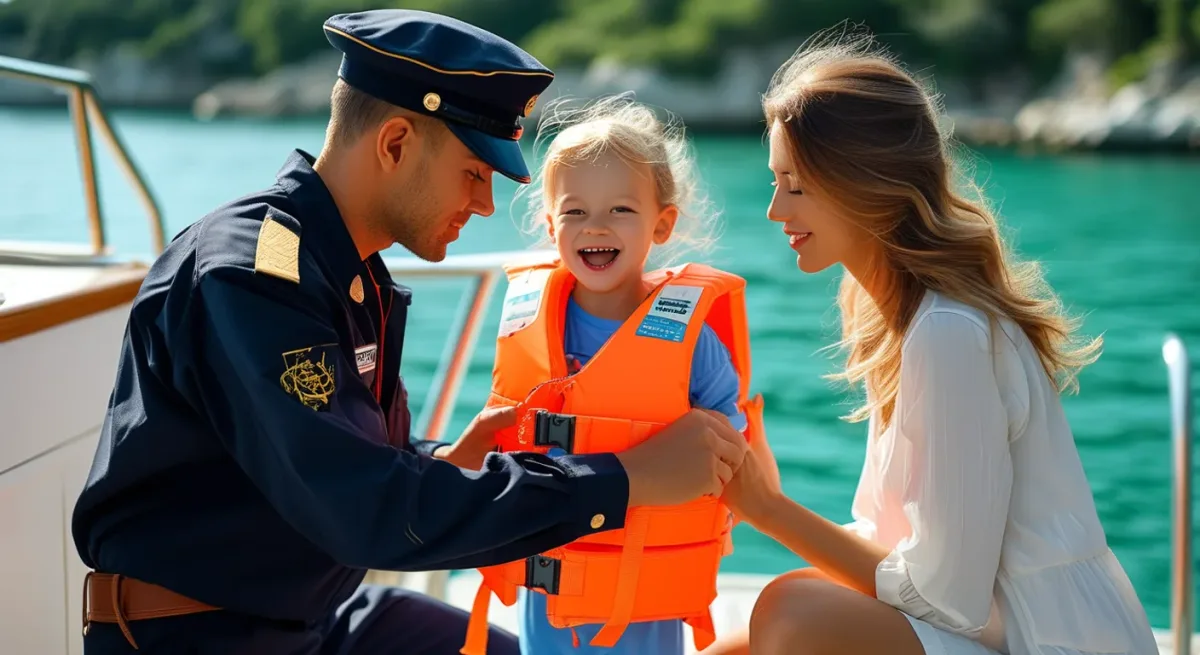
Three, taught on the first hour. Lifejackets on the dock, on the tender, and any time the crew say so — non-negotiable, worn before it's asked for. One hand for the boat: moving aboard means one hand always holding something, stairs and passerelles included. And the swim system: children swim with an adult present, counted in and counted out, and the crew's rule about when swimming stops — the boat moving, the tender running — is the week's constitution. Children raised on these three for six days return home better-marshalled than they left; this is a bonus, not the objective.
Shaping the itinerary
The successful family week is shorter legs, longer stops: passages timed to the siesta hour so the drive happens while the small sleep, and anchor days stacked over marina nights at a ratio the children's temperament sets. Beaches beat towns until the evening; a bay with a restaurant jetty beats both. Build the week's two or three fixed pleasures — the beach club day, the fish restaurant the crew knows, the cave by tender — and let the rest flex. The preference sheet matters double with children aboard: the ages, the foods, the bedtimes, and the note that the six-year-old believes she cannot sleep without the fan on are all provisioning inputs.
The honest cautions
Age matters at the extremes: infants are logistically fine but need the yacht's kit confirmed precisely, and teenagers need the itinerary to include at least occasional civilisation — a beach club with wifi is a legitimate demand at fifteen. September and June buy calmer water and emptier bays than the school-holiday peak, at the cost of the holiday calendar; families bound to August should book the boat and the calmest cruising ground they can — the protected gulfs beat the open island chains — and lower the daily distance until the holiday lowers itself.