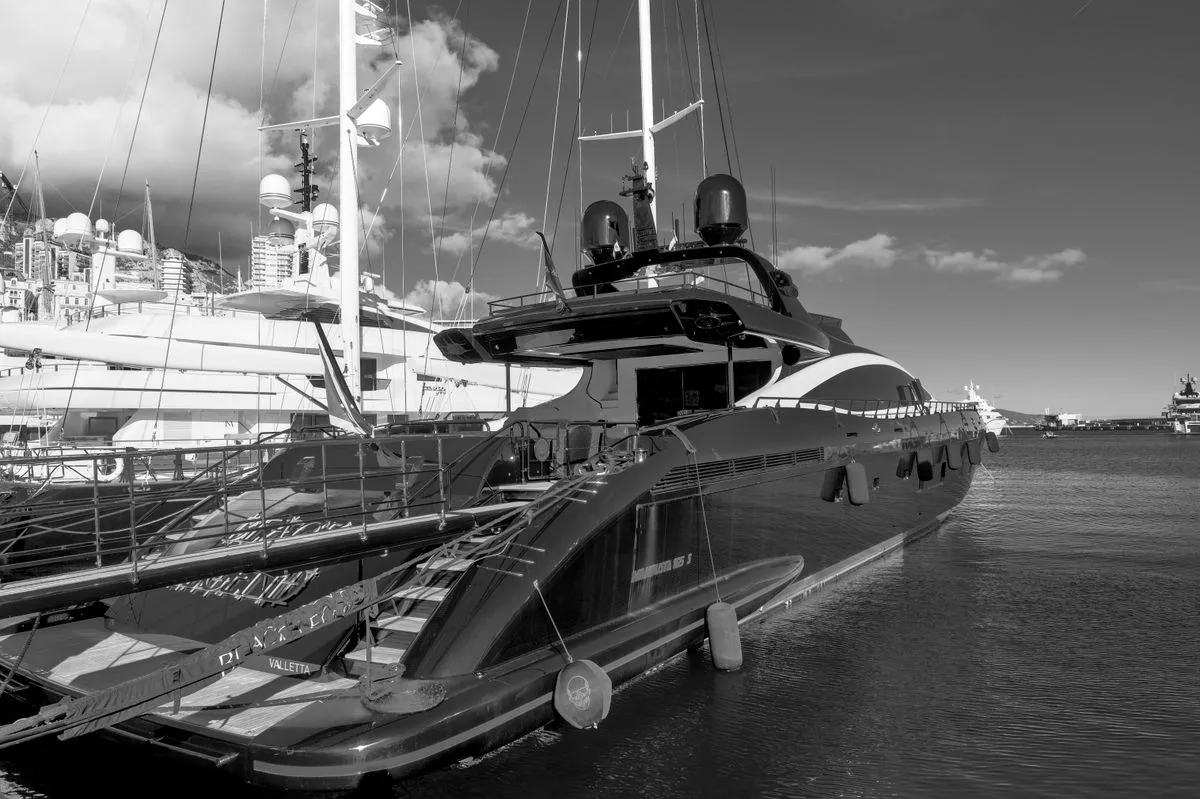
A superyacht show and a boat show are both trade fairs on water, but they serve different fleets, different buyers and, in practice, different towns. A boat show is a consumer event: production boats from roughly 6 to 24 metres, rows of tenders, dinghies and equipment, priced for people who buy with a mortgage and a trailer. A superyacht show is a trade event for professionally crewed vessels — the industry generally means yachts of 24 metres and up, and most often 40 metres and beyond, a range Wikipedia's superyacht overview describes as running from 40 metres to more than 180 metres, with some usage down to 24 metres.
The practical difference comes down to who is allowed on the dock. At a boat show, anyone with a ticket can step aboard. At a superyacht show, access is vetted: brokers, charter managers, captains, shipyard representatives and pre-qualified clients. The yachts are not for the general public to wander through, and the deals discussed on board are measured in millions, not in deposit-and-finance terms. If your plan for the season is a charter week or a first tender, the boat show is your event; if you are weighing a purchase above roughly 24 metres or a serious charter programme, the superyacht show is where the relevant people are in one marina. We covered a connected angle in The Monaco Yacht Show: a first-timer's plan.
Who actually attends each kind of show
A consumer boat show is a crowd event. Attendance includes first-time buyers, weekend sailors, fishing families, equipment vendors and local dealers. The commercial machinery underneath is retail: orders placed at the show, show discounts, finance desks on the stand.
A superyacht show inverts that. The walkways carry brokers, central agents, captains, chief engineers, interior designers, refit yards, flag-state registrars and crew agencies. Owners do attend, usually quietly and usually by invitation through their broker, but the show's primary business is the network: a captain comparing tender garages, a charter manager inspecting a galley, a designer pitching a refit. One broker's listing pages, Northrop & Johnson's superyacht sales inventory, currently advertises hundreds of vessels for sale worldwide — a reminder that the buying side of this market is continuous, and the show is where its participants meet in person.
What sits on the water — and what doesn't
At a boat show, the exhibits are production hulls: day boats, cruisers, catamarans, RIBs, outboards on stands. Almost everything shown can be delivered to a buyer within a season, and most of it is displayed on land as well as afloat.
At a superyacht show, the exhibit is the marina itself. Yachts of 40, 60, 90 metres berth bow-to-stern, and boarding them is the product demonstration. The scale matters: according to Wikipedia's superyacht entry, the fleet as of 2018 ranged up to Azzam at 180.6 metres, and the largest sailing yachts ran from 53 to 107 metres. No shore hall could hold that; the show is the fleet, gathered. Construction methods change with size, too — larger yachts are typically steel, aluminium or composite rather than fibreglass — which is why the conversations on the dock concern hulls, class rules and crew numbers rather than trailer weight.
What the money looks like
Boat-show money is sticker money: a price on a windshield, a deposit, a delivery date. Superyacht-show money is a different instrument entirely. Purchase prices are rarely published, and the charter side runs on weekly rates plus expenses. Wikipedia's overview notes that many superyachts are available for charter with prices that may exceed €100,000 per week, before the advance provisioning allowance — typically a percentage on top that covers fuel, food and berthing.
What this means for a visitor: at a boat show you can compare two 40-footers in an afternoon and buy one. At a superyacht show, nothing is bought in an afternoon. The show produces relationships and shortlists; the transaction follows over months, through sea trials, surveys and a lawyer.
Which one fits your plans
The honest sorting question is not budget but intent. If you want to own a boat you handle yourself, or you are shopping for a tender, dinghy or equipment, go to a boat show — our short taxonomy of which boat show fits your plans sorts the consumer circuit by region and season. If you are considering a crewed charter above the production range, or you simply want to see the large fleet gathered, the superyacht shows are the better use of a day — our first-timer's plan for the Monaco Yacht Show covers the access rules and how to get aboard legitimately. For related coverage, see Which boat show fits your plans: a short taxonomy.
There is also a middle path worth naming: regattas. Events such as the St Barths Bucket and the Superyacht Cup Palma put the large fleet on the water and racing, which is a better way to judge how a yacht actually behaves than any static berth — see how to watch superyachts race properly and Palma's season opener. And if the show is a means to a holiday rather than an end, our guide to folding a regatta into your charter week and the wider Regattas & Shows section track the calendar.
Our analysis: two industries that share a word
The confusion is linguistic. Both events are "boat shows," but they are effectively two industries sharing a marina. The production-boat trade sells volume and finance; the superyacht trade, by Wikipedia's account, is a small one — roughly 10,000 vessels over 24 metres existed worldwide as of 2016, with annual production around 150, and about half of new builds in recent years coming out of Italy. A market of hundreds of annual deliveries does not need a hall of walk-in visitors; it needs a vetted dock in Monaco, Fort Lauderdale or Palma once a year.
So the difference, stated plainly: a boat show sells you a boat. A superyacht show introduces you to the people who will build, crew, provision and charter one — and the catch is that you cannot simply buy a ticket and walk on. Plan accordingly, and check our charter coverage before you go, because the rate bands you will hear quoted on the dock assume you already know what an APA is.