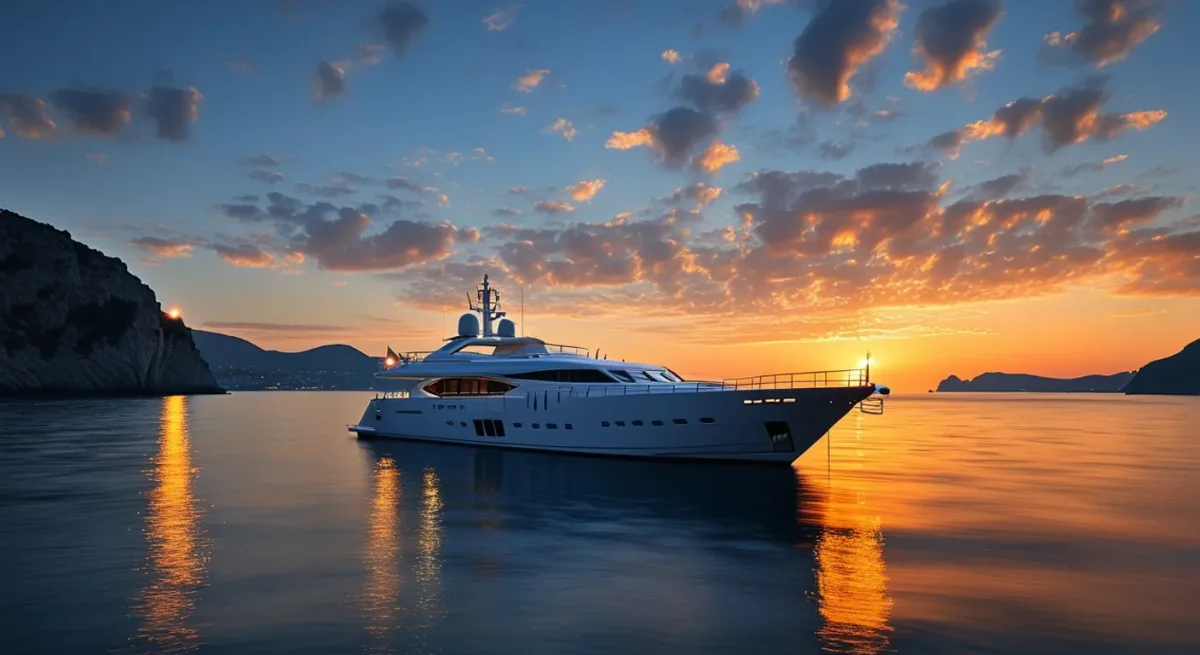
The anchoring hour mystifies guests more than any other part of the day, because it looks like the boat breaking things on purpose: the engines run hard astern, chain growls out of the locker, the deck vibrates, and then everyone stops and has a drink. What is actually happening is a piece of engineering theatre with a script. The captain picks the spot for depth, holding and swing; the anchor drops; the boat reverses to set it, digging the flukes into the seabed under power; the mate counts the chain; and the evening begins only when the anchor is proven, not merely dropped. Guests who understand the script enjoy the show and stop asking whether something is wrong.
This is an explainer of standard practice aboard crewed yachts; every captain's procedures govern their own boat.
Why the boat keeps moving after the anchor is down
Because anchoring is a swing, not a parking space. The boat hangs from a length of chain — commonly around four times the depth in gentle conditions — and every wind shift or tide change re-arranges the fleet around its anchors. This is why the captain cares about the boats nearby when choosing the spot, why two vessels of very different sizes swing differently and are best not neighbours, and why the gap that looks generous at six o'clock is the gap that matters at midnight. The anchor light that comes on at dusk is the fleet's way of saying this to each other.
The rules that involve guests
Three, mostly about staying out of the machinery's way. The windlass end of the boat during anchoring belongs to the crew — the chain, the anchor and the fingers near them are a professional-only combination. Weight distribution matters more than it looks: everyone crowding the bow to watch changes the boat's trim and the mate's view, so the foredeck viewing party is politely a no. And the hour after anchoring is when the crew checks the set and the swing — a good time for guests to be seated, drinks in hand, rather than launching the paddleboards directly over where the mate is eyeballing a transit.
Night at anchor, honestly
Anchorages are quiet by convention after about ten or eleven, and the sound carries across water in both directions — the music level that seems right on deck is a broadcast at the next yacht. The generator that runs overnight runs for air conditioning and refrigeration, a trade every anchagement makes knowingly. If the wind gets up at three in the morning and the deck lights come on, that is the crew doing an anchor check, which professionals do routinely and guests should sleep through; the time to be awake is if the crew wakes you, and they know how to make that decision quickly.
The one guest habit that helps
Keep a general sense of what's around — the shore, the neighbours, the direction home — and mention anything that changes: a line in the water it shouldn't be, a dinghy adrift, the shore looking closer than at dinner. Crews watch all of this professionally, but a boat is a small town and its best neighbourhood-watch programme is guests who simply notice. The reward is the thing the whole exercise buys: a night rocking gently in a bay no marina could improve on.